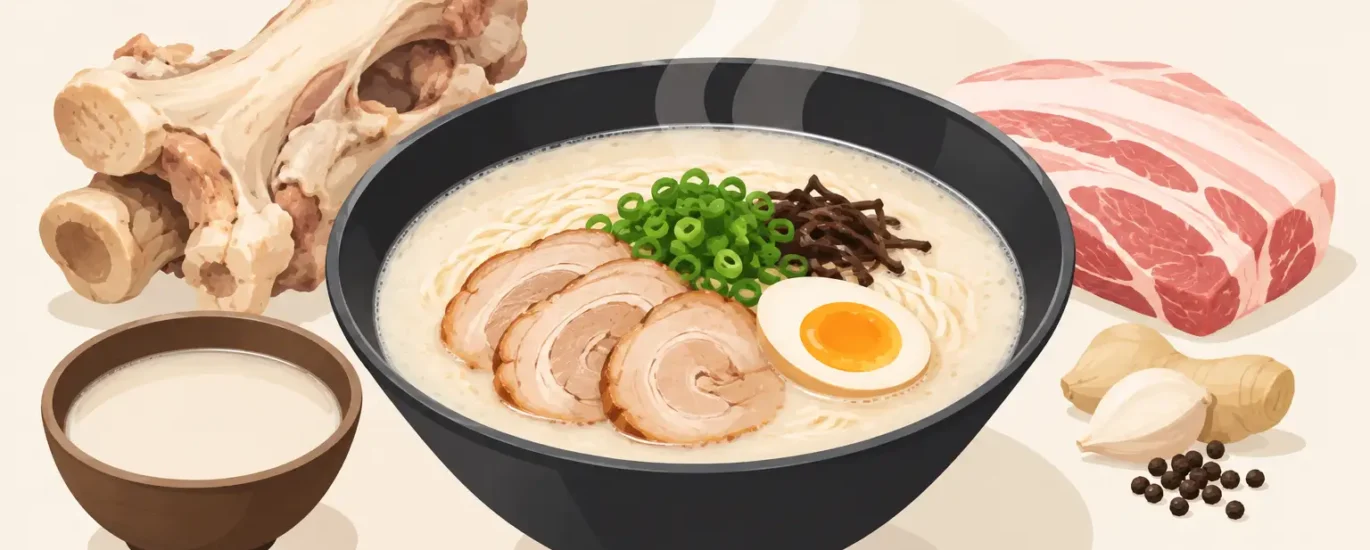
A great tonkotsu bowl announces itself before the first bite. The broth arrives pale, glossy, and fragrant, clinging lightly to the noodles instead of sitting thinly at the bottom of the bowl. So, what makes tonkotsu broth rich? It is not one secret ingredient. It is the patient combination of pork bones, marrow, collagen, fat, high heat, and careful finishing.
Tonkotsu ramen is comfort food with real depth behind it. Its creamy look can surprise first-time ramen diners, but the richness comes from technique as much as ingredients. When it is done well, the broth feels full and silky without becoming heavy, carrying enough savory pork flavor to make every topping taste more complete.
What Makes Tonkotsu Broth Rich?
At its core, tonkotsu means pork bone. Cooks use bones with plenty of connective tissue, marrow, and cartilage, often including pork feet, neck bones, backs, and femurs. These are not quick-cooking ingredients. They need time and heat to give up what makes the broth satisfying.
Collagen is a major part of the story. As connective tissue cooks for hours, collagen breaks down into gelatin. That gelatin gives the broth body and a smooth, almost velvety feel on the tongue. It is why a good tonkotsu broth has more presence than a simple pork soup. Even before seasoning, it has a satisfying texture.
Marrow contributes another layer of richness. It brings fat and a deep pork character that helps make the broth taste rounded rather than sharp. Different bones create slightly different results, which is why ramen kitchens treat their bone selection and cooking schedule seriously. A broth made mostly from leaner bones can taste clean but less lush. One made with too much fat can feel oily instead of creamy. The balance matters.
The Creaminess Comes From Emulsification
The cloudy, pale color of tonkotsu broth is one of its signatures. It does not come from cream or dairy. It comes from a strong, active boil that breaks pork fat, gelatin, bone marrow, and cooking liquid into tiny particles and suspends them together.
That process is called emulsification. Think of it as the broth becoming one unified liquid rather than a pot where fat floats separately on top. A lively boil helps create that creamy appearance and fuller mouthfeel. The broth should look inviting and rich, but it still needs to taste clean enough that you want another sip.
This is also why heat management matters. A very gentle simmer may create a clearer pork stock with a different character. For traditional creamy tonkotsu, cooks usually want more movement in the pot. But too much evaporation or a neglected pot can push the broth toward bitterness, excessive saltiness, or an overly greasy finish. Richness is not simply about adding more fat. It is about bringing all the elements together properly.
Time Builds Depth, Not Just Thickness
A tonkotsu broth cannot be rushed into tasting deeply developed. Long cooking softens the bones and extracts gelatin, fat, and savory flavor into the liquid. Some bowls begin with broth that has been tended for many hours, with bones replenished or batches blended to maintain a consistent character.
The goal is not to cook until the broth is merely thick. Thickness alone can feel flat. The goal is depth: pork flavor that lingers, a gentle sweetness from the bones, and enough body to support the noodles and toppings.
Preparation before the main cook also makes a difference. Bones are commonly cleaned and blanched first to remove impurities. This extra step helps the finished broth taste more focused. It may seem counterintuitive to start with an aggressive boil and still aim for a clean flavor, but that contrast is part of the craft. Careful preparation creates a better foundation. Long, energetic cooking creates the creamy finish.
Seasoning Gives the Broth Its Direction
Pork bones provide the body, but seasoning gives a ramen bowl its personality. In ramen, the concentrated seasoning base is often called tare. It can include soy sauce, salt, miso, aromatics, and other savory ingredients, depending on the style of bowl.
A well-made tare does not cover the pork broth. It wakes it up. Salt makes the sweetness and savoriness of the bones more noticeable, while ingredients such as garlic, scallion, ginger, or sesame can add aroma and contrast. The exact blend varies from kitchen to kitchen, which is one reason two tonkotsu bowls can look similar but taste completely different.
Aromatic oil often finishes the bowl as well. A little pork fat, garlic oil, scallion oil, or chili oil can lift the fragrance and add a pleasing sheen. This is where restraint earns its place. Enough oil creates a warm, satisfying first impression. Too much can coat the palate and hide the broth’s deeper flavors.
Noodles and Toppings Change How Richness Feels
The broth may be the heart of tonkotsu, but it is not experienced alone. Noodles absorb some of the broth while carrying it to every bite. Thin, firm ramen noodles are a natural fit because they provide a little resistance against a creamy, full-bodied soup. If the noodles are overcooked, the bowl can feel soft and heavy. If they are prepared with the right bite, they keep the experience lively.
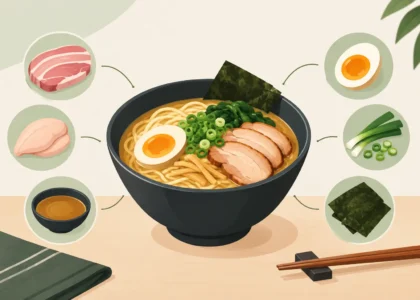
Chashu also adds to the impression of richness. Tender pork belly or shoulder brings savory fat, seasoning, and a soft texture that echoes the broth without replacing it. A jammy egg contributes its own richness, while scallions, pickled ginger, or other bright toppings can cut through the heavier notes.
That contrast is worth paying attention to. The best bowls do not taste rich in one single direction. They move between creamy broth, springy noodles, tender chashu, fresh aromatics, and the occasional pop of heat or tang. Each element keeps the next spoonful interesting.
Why Some Tonkotsu Broths Feel Better Than Others
A bowl can be pale and creamy yet still miss the mark. Sometimes the pork flavor is weak, sometimes the fat sits separately, and sometimes the seasoning overwhelms everything else. A truly satisfying tonkotsu broth has balance.
You should notice the broth’s body first, then its savory pork depth, then its aroma. It should coat the noodles without feeling gluey. It should feel warming rather than tiring. And it should leave room for the toppings to matter.
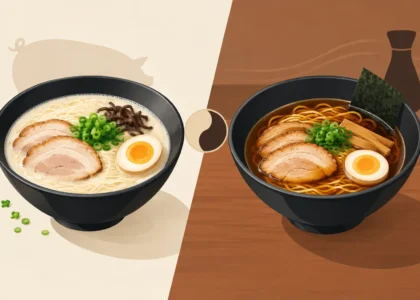
Personal preference plays a role, too. Some diners love a denser, more intense bowl with extra garlic and chili oil. Others prefer a cleaner tonkotsu with a lighter finish. Neither choice is wrong. The important thing is that the broth tastes intentional, not simply fatty or salty.
At Kagerou Ramen House, that is the pleasure of choosing a Tonkotsu bowl: creamy pork broth, tender chashu, properly prepared noodles, and fresh toppings working together in one comforting meal. Order it when you want something filling, sit with it for a few unhurried minutes, and let the broth do what great ramen broth does best – make an ordinary meal feel like a proper reset.