A delivered bowl of ramen can still be a deeply satisfying meal the next day, but only if you treat its parts differently. The secret to how to reheat delivered ramen is not blasting the whole bowl in the microwave. Warm the broth gently, give the noodles a short refresh, and add the fresh toppings at the very end. That is how you bring back the rich aroma, tender chashu, and comforting first slurp.
Why Ramen Needs a Different Reheating Method
Ramen is built around contrast. The broth should be hot and fragrant, the noodles should have a little spring, the chashu should be soft, and toppings such as scallions, nori, and a seasoned egg should still taste fresh. When every ingredient is heated together for too long, those contrasts disappear fast.
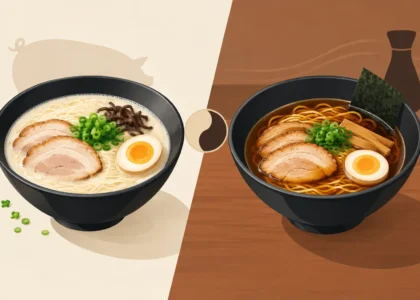
Noodles keep absorbing broth while they sit in the delivery container. That is normal, especially with a rich tonkotsu broth. The longer they rest, the softer they become. Reheating the full container can push them from comforting to overly soft, while fresh greens lose their color and nori turns into a soggy sheet.
A little separation is the restaurant-style move. It takes only a few extra minutes and makes a real difference in the bowl.
How to Reheat Delivered Ramen Step by Step
Start by opening the container and checking how the ramen was packed. Many ramen deliveries arrive with broth, noodles, and toppings in separate containers. If yours did, you are already set up for success. If everything came together, carefully lift out the toppings and as many noodles as you can before heating.
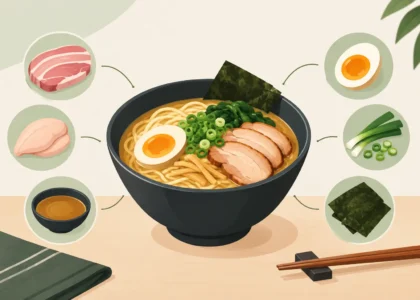
Set aside anything meant to stay fresh, including scallions, bean sprouts, corn, greens, nori, sesame seeds, and chili oil. Keep a soft-boiled egg aside too. It does not need a long reheat and is much better added close to serving.
If the noodles are tightly clumped, do not pull them apart aggressively. A little hot water and a gentle toss will loosen them without breaking them into short pieces.
Warm the Broth First
Pour the broth into a small pot and heat it over medium-low to medium heat. Stir occasionally so the richer elements, especially in pork-based tonkotsu ramen, combine again as they warm. Heat until the broth is steaming and very hot, but avoid a hard, rolling boil.
Boiling can make the broth reduce too quickly and can dull its balance of salt, fat, and aroma. If it looks thicker than you remember, add a small splash of water. Start with one or two tablespoons. You can always add more, but you cannot take it back out.
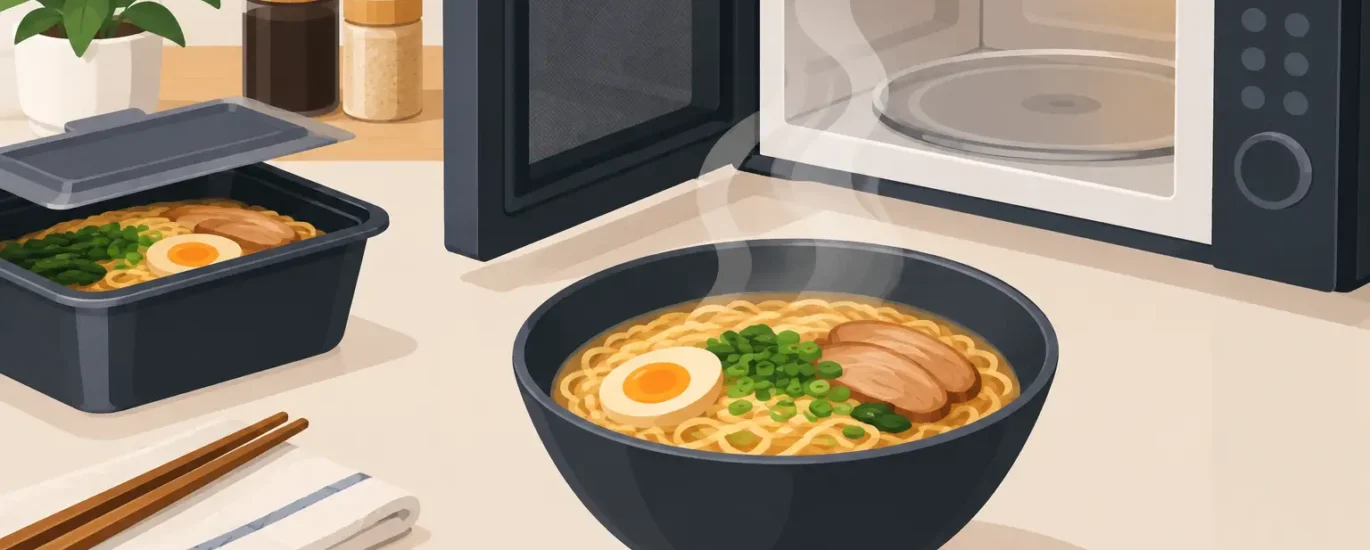
No stove? Microwave the broth in a microwave-safe bowl in 45-second intervals, stirring between each interval. Cover it loosely to avoid splatters. Depending on the amount of broth and the power of your microwave, it will usually take two to four rounds.
Refresh the Noodles Briefly
The best way to revive ramen noodles is a quick dip in hot water. Bring a separate pot of water to a boil, then lower the noodles into the water for 20 to 45 seconds. Use chopsticks or tongs to gently separate them. Drain well as soon as they loosen and feel warm.
This short bath rinses away some of the extra starch they picked up in the container and gives them a cleaner, springier bite. Do not leave them in for several minutes. Delivered noodles are already cooked, so they need a refresh, not a second full cooking session.
If you only have a microwave, place the noodles in a bowl with a few tablespoons of water, cover loosely, and heat for 20 to 30 seconds. Toss, then repeat once only if needed. It is not quite the same as the hot-water method, but it is far better than microwaving them in the broth until they turn soft.
Reheat Chashu and Other Proteins Gently
Chashu is at its best when it is warmed through but not cooked again. Place the slices in the hot broth for about 30 to 60 seconds before serving. The residual heat will soften the pork and warm its rich edges without drying it out.
For chicken, beef, or tofu, the same gentle approach works well. Let the hot broth do most of the work. Seafood deserves extra care: add it only long enough to take the chill off, since overcooked shrimp or fish can become firm quickly.
A marinated egg should usually be added after the broth and noodles are combined. If you prefer it warmer, place it in the hot broth for 20 seconds, then serve. Longer heating can turn that soft, jammy center firm.
Put the Bowl Back Together
Place the refreshed noodles in your serving bowl first. Pour the hot broth over them, then arrange the chashu or other protein on top. Add your egg, scallions, greens, corn, bamboo shoots, sesame, and nori last.
This is also the moment to taste. Delivery ramen may need a tiny adjustment after refrigeration. A few drops of chili oil can bring back heat, while a splash of hot water can loosen a broth that has become too concentrated. If you have sesame oil, use it sparingly. A little goes a long way, and the ramen’s original broth should remain the star.
For nori, keep it dry until the final moment. Rest one edge against the broth and leave the rest above the surface so it keeps a little texture. It is a small detail, but it makes the bowl feel freshly served.
The Microwave-Only Method for Delivered Ramen
Sometimes you need lunch at your desk or a late-night meal with no pot in sight. In that case, separate what you can. Microwave the broth on its own, covered loosely, in short intervals until steaming. Heat the noodles with a small splash of water for no more than 30 seconds at a time.
Combine them only when both are hot, then add the toppings. If the noodles and broth arrived mixed and cannot be separated easily, microwave in 30-second bursts, stirring gently after each one. Remove the fresh toppings first and add them back later.
The trade-off is simple: a microwave is fast, but it gives you less control. Short intervals prevent overheated broth and overcooked noodles, which are the two biggest threats to a good leftover bowl.
Common Mistakes That Flatten the Flavor
The most common mistake is reheating ramen in its closed delivery container without checking whether it is microwave-safe. Transfer food to a heat-safe bowl unless the container clearly says it can be heated. Tight lids can trap steam, and some takeout packaging is designed for transport, not reheating.
Another mistake is trying to fix cold ramen with maximum heat. High heat does not make ramen better faster. It often makes the broth greasy around the edges, toughens the protein, and leaves the center of the bowl unevenly warm.
Do not add all of the fresh toppings before reheating, either. Scallions lose their bright bite, greens collapse, and nori becomes soft. Save those finishing touches for the bowl you are about to eat.
Finally, avoid adding too much water at once. A small splash can restore balance, but too much turns a rich broth thin and bland. Taste as you go.
Store It Safely Before Reheating
If you are saving delivered ramen, refrigerate it within two hours of arrival. If it has been sitting out longer than that, it is safer to skip it. In very hot conditions, that window is even shorter.
Store ramen in separate containers whenever possible. Keep the broth, noodles, and toppings apart, then reheat only the portion you plan to eat. Reheating the same bowl more than once is not ideal for either flavor or food safety.
A great ramen bowl is not meant to feel like a compromise just because it arrived at your door. Give it a few careful minutes, rebuild it with hot broth and fresh toppings, and let that first warm, savory slurp do the rest.