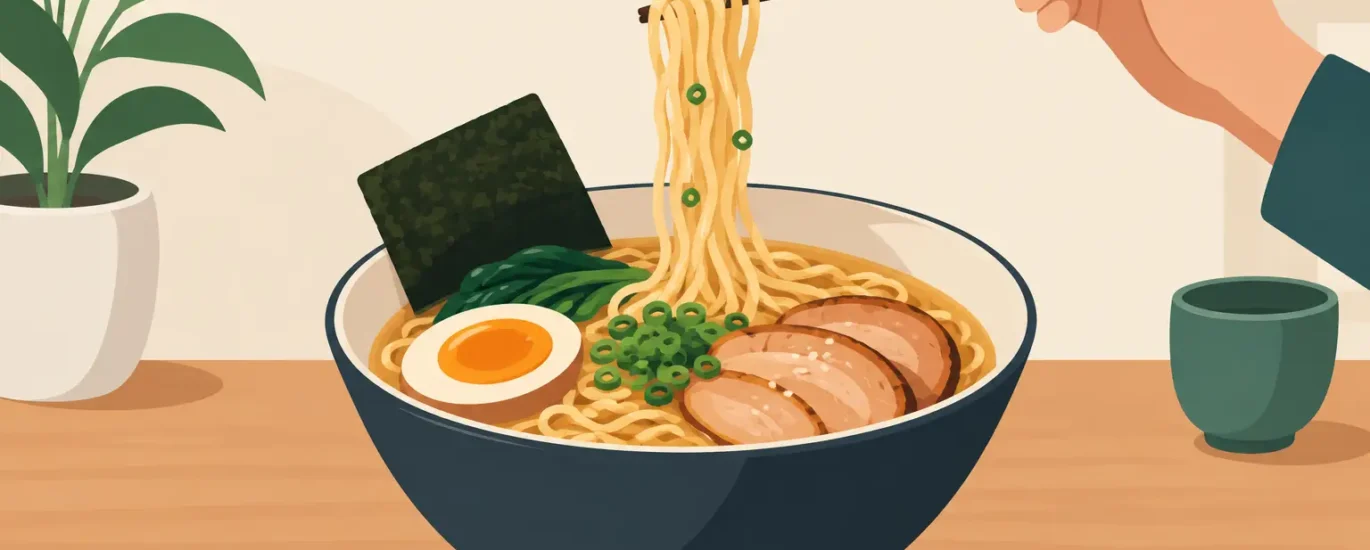
A great bowl arrives hot, fragrant, and ready to change by the minute. That is the first thing to know about how to eat ramen: there is no stiff set of rules, but there is a delicious order that helps you enjoy the broth, noodles, chashu, and toppings at their very best.
Ramen is comfort food with momentum. The noodles soften, the broth cools, and every topping brings a slightly different texture to the bowl. You do not need to rush through it, but you do want to begin while everything is fresh, hot, and exactly as the kitchen intended.
How to Eat Ramen at Its Best
Start by taking in the bowl before reaching for anything. Notice the steam, the sheen of the broth, the slices of tender chashu, and the toppings arranged across the surface. A ramen bowl is meant to look inviting, but it is not a display piece. Its best moment is right now.
If you have chopsticks and a soup spoon, use both. Chopsticks are for noodles, meat, and larger toppings. The spoon is for broth and smaller bites. You can certainly eat ramen with only a fork and spoon if that is what feels comfortable. The goal is a full, satisfying bowl, not a performance.
Taste the broth first
Before stirring the bowl into one flavor, take a small sip of broth with the spoon. This gives you the clearest sense of the ramen’s character. A rich tonkotsu broth may taste creamy, savory, and deeply pork-forward. A shoyu ramen may feel lighter and more fragrant, with soy sauce bringing salt, warmth, and depth.
That first sip also tells you whether the bowl needs anything extra. In most cases, it does not. Good ramen is seasoned as a complete dish. If chili oil, garlic, sesame, vinegar, or other condiments are available, add them slowly after you have tasted the original broth. A little can brighten a bowl. Too much can cover up the work already in it.
Loosen the noodles, then lift a small portion
Use your chopsticks to gently separate the noodles under the surface. Do not aggressively stir the entire bowl. You want to free the noodles without turning the toppings into a tangle or muddying the presentation all at once.
Lift a manageable bundle, just enough for one or two mouthfuls. Let excess broth drip back into the bowl for a second, then bring the noodles to your mouth. Slurping is welcome. It cools the noodles slightly and pulls in some broth with every bite, which is exactly the point.
There is no need to create a dramatic noodle splash. A simple, comfortable slurp is enough. If the noodles are very hot, pause for a moment, take a smaller bite, and alternate with broth. Ramen should wake up your appetite, not burn your tongue.
Why You Should Not Wait Too Long
Ramen is not designed for a long photo session or a slow, interrupted meal. The broth and noodles are in conversation from the second they meet. As time passes, noodles continue to absorb liquid and become softer. Some people enjoy that softer finish, but most ramen is at its peak early in the meal, when the noodles still have spring and the broth is piping hot.
That does not mean eating fast means eating carelessly. Think of it as eating with attention. Take a few bites of noodles, a sip of broth, then a bite of chashu or a topping. Keep moving through the bowl while changing the flavor and texture in each mouthful.
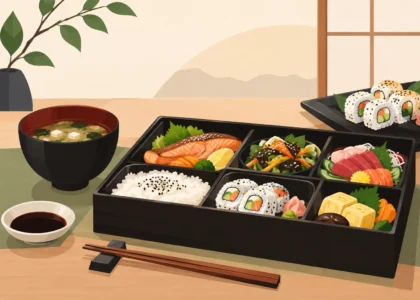
If you are sharing gyoza, sashimi, or other dishes, enjoy a little alongside your ramen, but avoid leaving your bowl untouched for too long. Let ramen be the center of the meal while it is at its most comforting.
Eat the Toppings Throughout the Bowl
The toppings are not meant to be cleared away before you begin the noodles. They are part of the experience. Take bites as you go, pairing them with noodles and broth in different combinations.
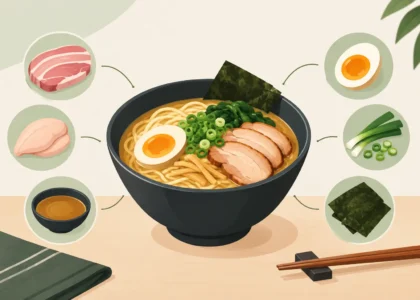
Chashu is especially good when it has soaked in a little broth but still holds its tender texture. Pick up a slice with chopsticks, or break it into smaller pieces if you want some in several bites. A soft egg can be eaten in halves or mixed gently into the broth, depending on how much richness you want in each spoonful.
Green onions bring a fresh, sharp lift against a rich broth. Nori adds a savory, ocean-like note and can be dipped into the soup before eating. Bamboo shoots offer crunch. Corn, mushrooms, sesame, and vegetables each change the bowl in their own way. There is no required order, so follow what tastes good together.
One useful approach is to save a few favorite toppings for the middle or end. When the bowl has warmed you up and the broth has opened up, a final bite of chashu with noodles can be even better than the first.
Should you mix ramen?
Mixing depends on the bowl. A gentle swirl is often helpful, especially if aromatic oil or seasoning sits near the top. It brings the broth together and distributes ingredients without destroying the texture of the noodles.
Avoid whipping the bowl around like pasta salad. Heavy mixing can break soft toppings apart and cool the soup faster. Taste first, then make small adjustments. The best ramen still lets you notice the broth, noodles, and toppings as distinct parts of one great bowl.
Use Condiments With a Light Hand
Condiments are there to let you personalize a bowl, not rescue it. If you want more heat, add a small amount of chili oil or chili paste. If you like a brighter, sharper finish, a few drops of vinegar may work well. Garlic can add punch, especially in a rich pork broth.
The trade-off is simple: every extra flavor changes the balance. Add one thing at a time, stir lightly, and taste again. If you are trying a ramen style for the first time, eat at least a third of the bowl before making major changes. You may find the flavor gets more satisfying as you move through it.
What to Do With the Remaining Broth
Finishing every drop of broth is completely optional. For some diners, the final spoonfuls are the reward: savory, warm, and full of flavor from the noodles and toppings. For others, especially with a very rich tonkotsu, a few final sips are plenty.
There is no badge for an empty bowl. Listen to your appetite. Enjoy the broth while it tastes good to you, and stop when you are satisfied. Ramen should leave you full and happy, not uncomfortably overdone.
How to Eat Ramen at Home or as Delivery
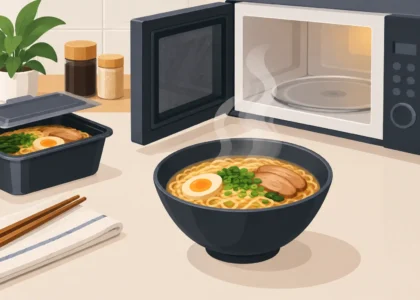
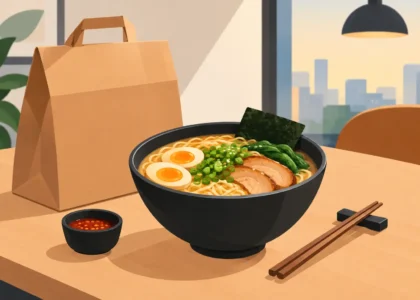
Restaurant ramen is best served immediately, but delivery ramen can still be excellent if you handle it quickly. If the broth and noodles arrive separately, pour the hot broth over the noodles right before eating. Add delicate toppings last so they keep their texture and color.
If everything arrives together, open the container as soon as possible to release steam, then give the noodles a gentle loosen with chopsticks or a fork. Reheat only if necessary, because overcooking is the quickest way to lose that ideal noodle bite. A cozy night in can still feel like a real ramen-house meal when the bowl is hot and treated with care.
At Kagerou Ramen House, the best approach is simple: come hungry, start with the broth, lift the noodles while they are hot, and enjoy the bowl your way. Reserve Table for a relaxed meal with friends, or Order Now when comfort is calling from home. The right way to eat ramen is the way that lets you catch every last satisfying bite.