Steam rises from the bowl before you lift a single noodle. That first breath can be porky and rich, clean and salty, deeply savory, or toasted and nutty. This guide to ramen broth styles makes that moment easier to read, whether you already know your favorite bowl or are choosing ramen for the first time.
Ramen is comfort food with range. Two bowls can arrive with similar noodles, chashu, scallions, and a soft egg, yet taste completely different because the broth sets the direction. Some broths are light enough for lunch. Others are built for a slow, satisfying dinner when you want to leave with a full belly.
What Actually Defines a Ramen Broth?
It helps to separate the parts of a bowl. The soup base provides body, often from chicken, pork bones, seafood, vegetables, or a combination. The tare is the concentrated seasoning that gives the ramen its main identity, such as soy sauce, salt, or miso. Aromatic oil adds another layer, carrying flavors like garlic, scallion, chili, or roasted sesame across the surface.
That is why labels can overlap. A bowl described as shoyu ramen may have a chicken-based soup, while another shoyu bowl may include pork, fish, or dashi. Tonkotsu is different: it usually refers to the opaque, pork-bone soup base itself. Every ramen house has its own recipe, so style names are a useful starting point, not a promise that every bowl will taste identical.
A Guide to Ramen Broth Styles
Tonkotsu: Creamy, Pork-Forward Comfort
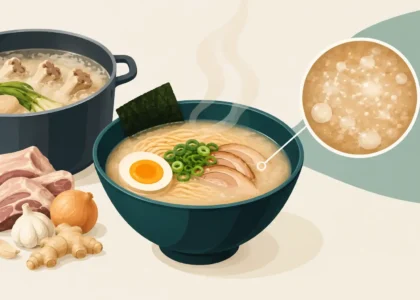
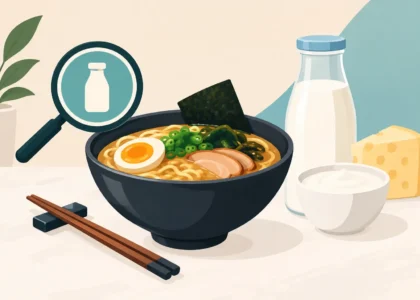
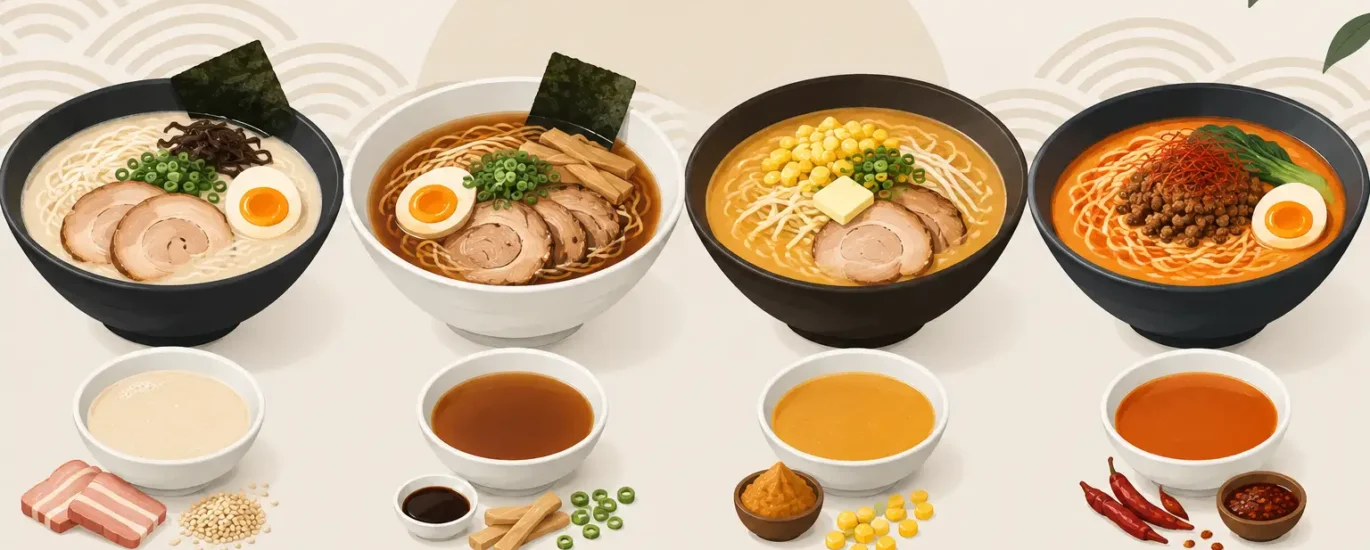
Tonkotsu ramen comes from pork bones simmered for a long time, often at a vigorous boil. The process emulsifies fat, collagen, and marrow into the liquid, creating its signature pale, cloudy appearance and a texture that feels almost creamy. It is not cream in the dairy sense. Its richness comes from the bones and the way the broth is cooked.
Expect a full pork aroma, deep savory flavor, and a coating quality that clings to thin noodles. Classic toppings often include tender chashu, scallions, kikurage mushrooms, nori, and a marinated egg. Garlic, chili oil, and sesame can make it even more intense.
Choose tonkotsu when you are hungry, want something rich, or love slow-cooked pork flavor. The trade-off is simple: it is the least subtle style on this list. If you prefer a lighter, clearer broth or are new to pork-forward ramen, shoyu or shio may be a better first bowl.
Shoyu: Savory, Balanced, and Familiar
Shoyu ramen is seasoned with soy sauce, giving the broth a brown or amber color and a savory, gently salty character. It is one of the most approachable ramen styles because soy sauce brings recognizable flavor without making the bowl feel heavy.
The underlying soup can be clear and chicken-led, pork-based, or boosted with dashi and dried seafood. A good shoyu broth has more going on than saltiness: it can taste rounded, slightly sweet, roasted, or delicately oceanic depending on the kitchen’s blend. Curly or medium-thickness noodles are common because they catch the broth well.
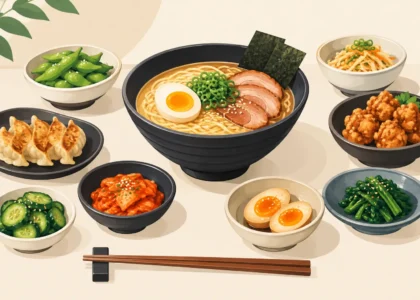
This is a smart order when you want balance. Shoyu ramen works for a casual lunch, a first ramen experience, or a dinner where you plan to add gyoza or sashimi to the table. If you enjoy a clear soup but want more depth than plain salt seasoning, shoyu usually hits the spot.
Miso: Bold, Nutty, and Built for Cold Days
Miso ramen gets its character from fermented soybean paste. The paste is stirred into the bowl or broth near the end of preparation, creating a fuller, cloudier soup with a savory, nutty, slightly sweet edge. Depending on the miso used, it can range from mild and golden to dark, earthy, and powerful.
Many miso ramens lean into hearty toppings: ground pork, corn, bean sprouts, cabbage, butter, garlic, or chili. These additions make sense because miso has enough presence to stand beside them. The noodles are often a little thicker, too, giving the bowl more chew and substance.
Order miso when you want a flavorful bowl with a little more character than shoyu but less pork intensity than a classic tonkotsu. It is especially satisfying in cool weather or after a long day. Keep in mind that miso’s fermented flavor is distinct. Fans love its depth, but diners looking for a clean, light broth may find shio more appealing.
Shio: Clear, Clean, and Delicate
Shio means salt, and shio ramen is seasoned with a salt-based tare. It is commonly the palest and clearest of the major ramen styles, though a clear appearance does not mean a thin flavor. Well-made shio broth can be layered with chicken, pork, dashi, dried seafood, kelp, or vegetables.
Because salt seasoning is less dominant than soy sauce or miso, shio lets the quality of the stock show clearly. You may notice the sweetness of chicken, the fragrance of ginger, or the mineral, coastal note of dashi. Toppings tend to stay restrained so they do not crowd the broth.
Choose shio when you want to taste the broth itself. It is a great warm-weather option and an easy choice for diners who prefer a lighter finish. The trade-off is that its elegance can be mistaken for simplicity. If you like big, forceful flavors, miso or tonkotsu will likely feel more immediately satisfying.
Other Broths You May See
Ramen menus are full of regional variations and house specialties. Tori paitan is a rich, opaque chicken broth made in a similar spirit to tonkotsu, but with chicken as the main source of body. It can be silky and satisfying without the unmistakable pork profile.
You may also see gyokai ramen, which uses seafood elements such as bonito, sardines, shrimp, or dried fish. Sometimes these flavors are blended into pork or chicken soup for a savory contrast rather than presented as a fish-forward broth. Vegan ramen can be just as satisfying when built with roasted vegetables, mushrooms, sesame, miso, kombu, and aromatic oils. It will not imitate pork broth exactly, and it does not need to. Its best version has its own deep, savory identity.
How to Choose the Right Bowl for Your Appetite
Start with how you want the meal to feel. For a rich, cozy bowl that can carry extra garlic or chili, choose tonkotsu. For all-around savory balance, choose shoyu. For fermented depth and a heartier profile, go with miso. For a cleaner, lighter experience, order shio.
Then think about toppings. Chashu adds richness, while a soft egg brings gentle creaminess and nori adds a briny note. Bean sprouts and scallions give crisp contrast. Chili can brighten a rich broth, but add it gradually if you want to understand the bowl’s original flavor first.
Noodles matter, too. Thin noodles pair naturally with many tonkotsu bowls because they cook quickly and lift the broth efficiently. Wavier, thicker noodles are especially enjoyable with miso and richer soups. There is no universal rule, though. The best pairing is the one that makes each bite feel balanced.
At Kagerou Ramen House, the pleasure is in that balance: rich broth, tender chashu, properly prepared noodles, and fresh toppings served as one complete bowl. You do not need a ramen vocabulary test before ordering. Pick the flavor that sounds good, take the first sip before mixing everything in, and let the bowl tell you what you want to try next time.
The right ramen is not always the richest or the most traditional-sounding one. It is the broth that suits your appetite right now, served hot enough to slow you down for a minute and good enough to make the next bite easy.